Celosta / Decorative ceramic breeze block fence
Decorative ceramic breeze block fence
Looking for a decorative fence that is not a solid wall? A built ceramic breeze block fence separates your plot from the street while letting light and wind through. Made of fired clay, it lasts for decades without paint and only looks better with age. For fences we only offer models whose manufacturer declares frost resistance.
 Visualisation
Where a breeze block fence works
A clay breeze block fence is a classic choice for the street front of a family house. The infill between brick piers protects your privacy without acting as a solid wall: light, air and part of the view pass through the openings, so the garden behind the fence is not left in shade and the wind does not push against the fence with its full force.
It works just as well as a garden wall around a terrace, a terrace privacy screen or a screen by the pool, an enclosure for bins or a dividing wall between neighbouring plots. For a lower fence a few courses of blocks on a plinth wall are enough; a taller fence is divided into panels by piers.
How much the fence reveals depends on the shape of the opening. A large opening such as Andalúzia CC 1 lets in the most light, while the nine small openings of Andalúzia CC 4 give more privacy.
Ceramic breeze blocks or concrete decorative blocks
In Slovakia, decorative fence blocks are most often made of concrete. They are affordable and strong. Fired ceramic is a different material with different properties, and it is worth comparing the two before you choose.
- Colour: fired clay gets its colour from firing, through the whole cross-section of the block, with no paint. Coloured concrete blocks are tinted with pigment and their shade may fade over time in sun and rain.
- Appearance over time: terracotta and fired brick darken with age and look natural. Hand-moulded blocks have slight variations, so the fence does not look machine-made.
- Non-combustibility: both fired ceramic and concrete are in reaction to fire class A1, i.e. non-combustible materials.
- Frost resistance: common for concrete, while for ceramic it depends on the model and firing. That is why we state for every model whether the manufacturer declares frost resistance. For fences we only recommend models labelled Outdoor / Indoor.
- Price: concrete blocks are usually cheaper. Ceramic is the choice for a fence that is meant to be part of the architecture of the house.
Which models are suitable for a fence
For a fence, choose models labelled Outdoor / Indoor. Hand-moulded Andalúzia CC blocks have a 20 × 20 cm module and need 23 pcs per m²; shapes with the same module can be mixed in one surface. The Italian collections Benátsko, Emília-Romagna and Lombardia suit prestigious fences and garden walls.
If you want a classic Czechoslovak fence, go for the original fence blocks Morava 1 and Morava 2.
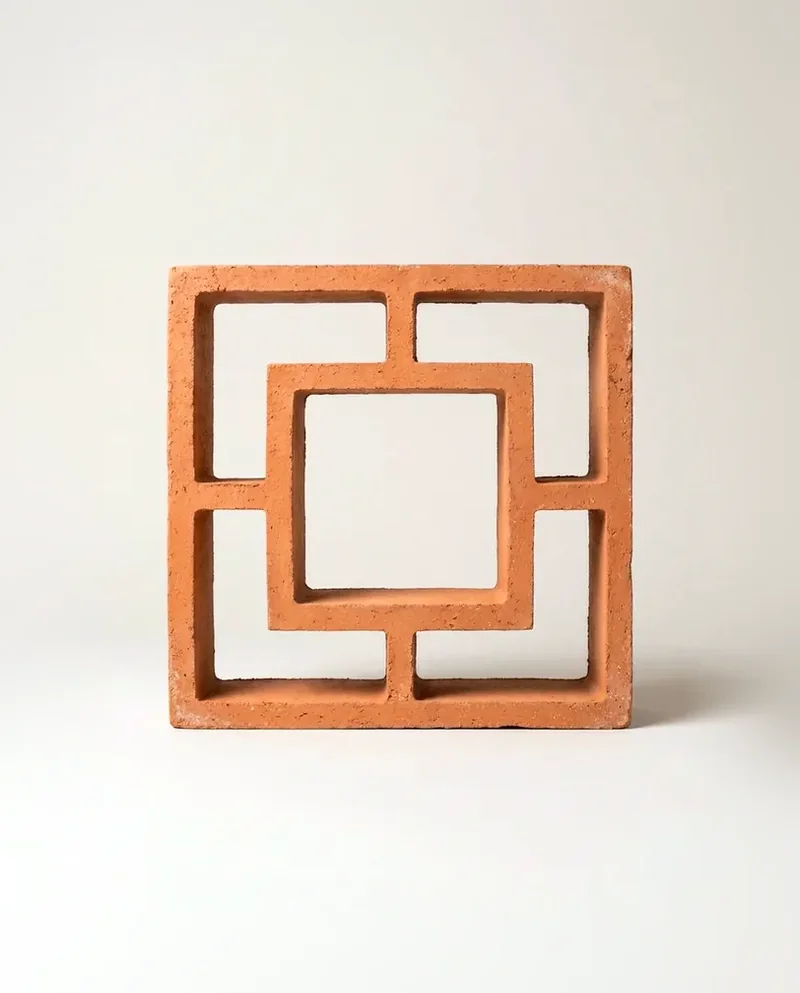
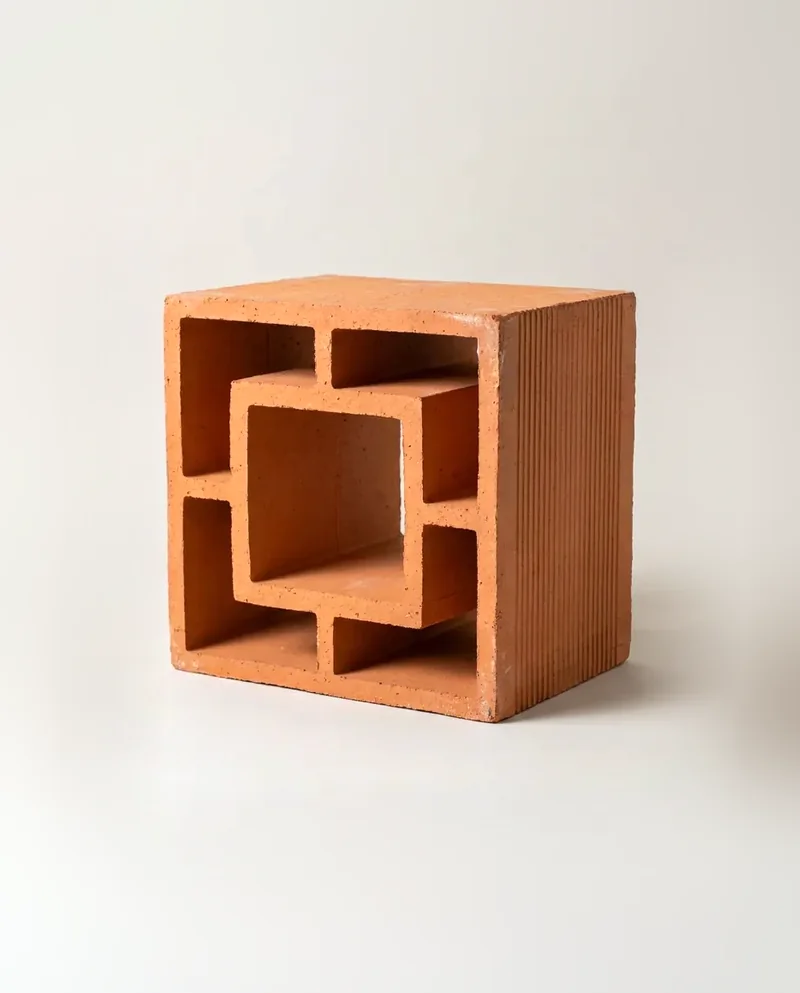
Morava 1
The original Czechoslovak fence block (plotovka) from the 1970s.
19 × 19 × 14 cm, also 11.3 cm thick, 25 pcs per m²
Signature


Morava 2
An original Czechoslovak fence block with a central circle.
19 × 19 × 14 cm, also 11.3 cm thick, 25 pcs per m²
Signature

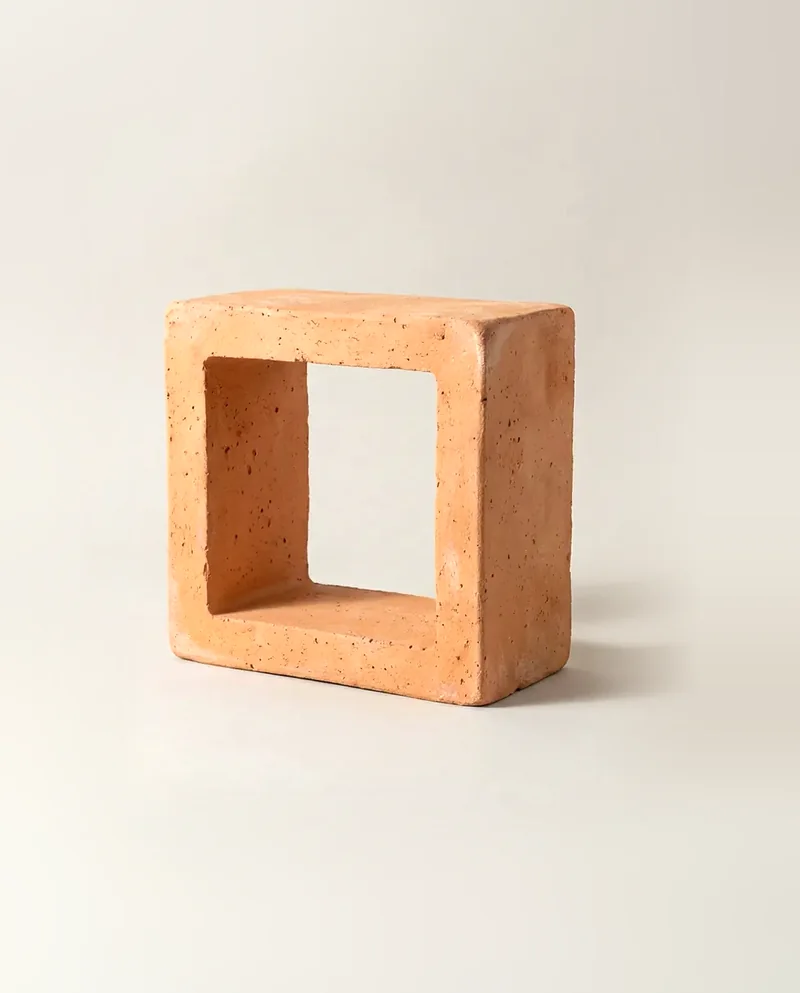
Andalúzia CC 1
One large opening, the most light and air.
20 × 20 × 8 cm, 23 pcs per m²
Signature
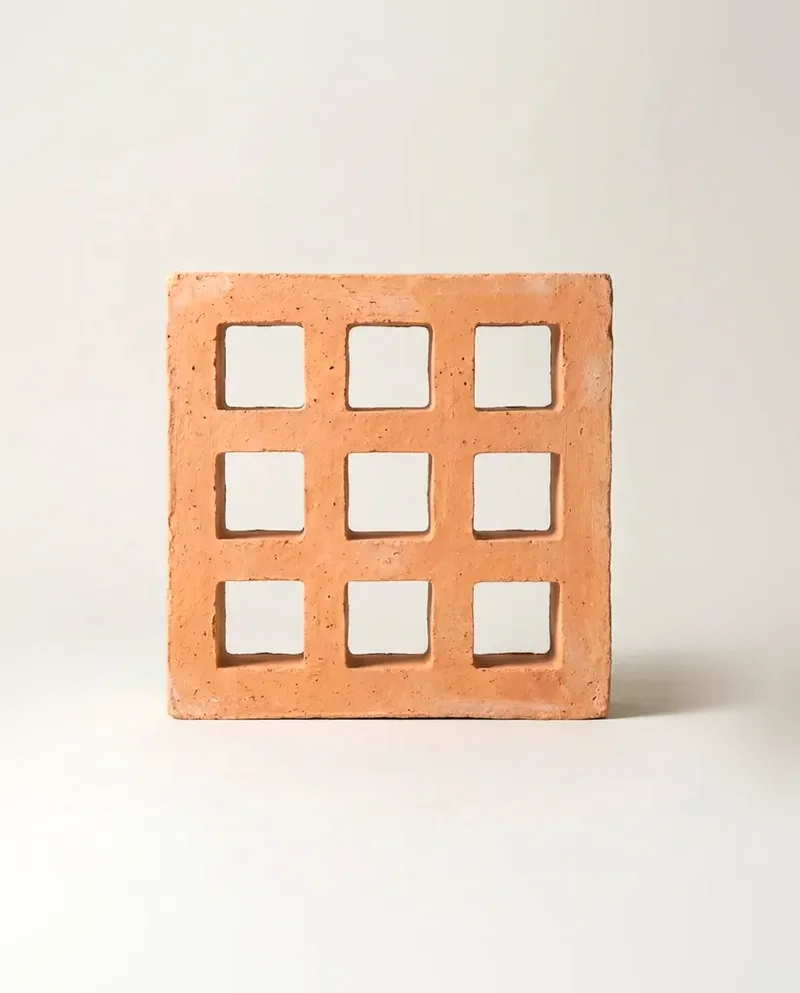
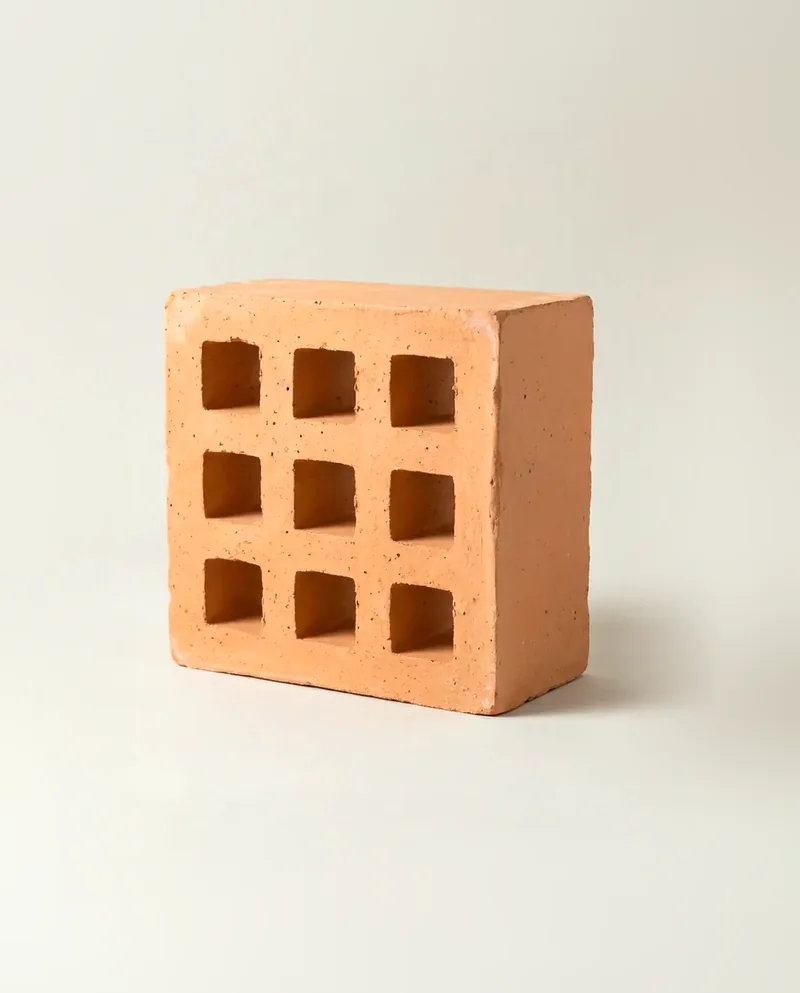
Andalúzia CC 4
Nine small openings, more privacy.
20 × 20 × 8 cm, 23 pcs per m²
Signature


Benátsko 9
Crossed arcs forming a star.
20 × 20 × 7 cm, 25 pcs per m²
Premium


Emília-Romagna 3
Rounded cups that form fish scales in a wall.
20 × 20 × 6 cm, 25 pcs per m²
Premium


Lombardia 1
A solid cross with a diamond opening.
20 × 20 × 9 cm, 25 pcs per m²
Premium
Repairing an old fired clay fence
Many fences from the 1970s and 1980s have cracked or missing fence blocks. The original "plotovka 20x20", as the 20x20 fence block is commonly called, actually measures 19 × 19 cm, and we supply it in a thickness of 14 or 11.3 cm. We supply Morava 1 from a brickworks that still makes them today, so they can be used to fill gaps in an old fence or to build a new retro-style fence. Before ordering, we recommend measuring the thickness of the original blocks.
Indicative price per m²
We give indicative block prices per m² incl. VAT, excluding transport, by the price line of the model:
- Essential: €49–120 per m². No model in this line is suitable for a fence; they are intended for indoor use.
- Signature: €125–310 per m². This includes Andalúzia CC and the Morava fence blocks.
- Premium: over €310 per m². Italian collections and handmade blocks made to order.
How to approach the build
Breeze blocks are laid in mortar, not dry. The fence needs a concrete foundation designed by a professional, piers and reinforcement in the bed joints. We describe the general procedure in the guide How to build a ceramic breeze block fence, and choosing materials for frost in the article Frost resistance of ceramics. The structural design of the fence, especially a taller one or one on a slope, should be assessed by a structural engineer or a builder.
Send us the length and height of the fence, or a photo of the original fence. We will prepare a quote with the number of blocks and a laying plan.
Frequently asked questions
How many blocks are needed per m² of fence?
For the 20 × 20 cm format it is 23 to 25 pcs per m² including joints. We state the exact quantity for each model and recalculate it in the quote based on the panel dimensions.
Can a ceramic breeze block withstand frost?
It depends on the model. For fences we only offer models whose manufacturer declares frost resistance; on the website they are labelled Outdoor / Indoor. More in the article Frost resistance of ceramics.
Can breeze blocks be laid dry?
No. Breeze blocks are laid in mortar with a joint, reinforcement goes into the bed joints and the fence is divided into panels by piers.
Do you have 20x20 fence blocks to repair an old fence?
Yes, the original Czechoslovak fence blocks Morava 1 and Morava 2 measure 19 × 19 cm, in a thickness of 14 or 11.3 cm.
How much does a breeze block fence cost?
The blocks alone cost from around €125 per m² in the Signature line and over €310 per m² in the Premium line, incl. VAT, excluding transport. On top of that come the foundation, piers, mortar and labour.
Planning a fence?
Send us the length, height and location. We will prepare a quote with the number of blocks and a laying plan.
Request a quote