Celosta / Guides / Breeze blocks or glass blocks: which to choose for a partition
Breeze blocks or glass blocks: which to choose for a partition
Both glass blocks and ceramic breeze blocks bring light into a layout where a solid partition would create a dark corner. Yet they behave very differently. We compare them on what really matters for a partition.
Published
 Visualisation
Light and air
Glass blocks let through a lot of light, but no air. A partition made of them is a closed wall that is merely translucent. Ceramic breeze blocks let both light and air through their openings. The rooms behind them stay connected, and heat and ventilation are distributed more evenly.
Privacy and view
Glass blocks diffuse the image, so only silhouettes are visible behind them. With breeze blocks, privacy is set by the shape and size of the openings. A large opening such as Valencia LE 2 only suggests a division of the space, while ornamental blocks with many smaller openings, for example Valencia LE 8, give more privacy. Viewed at an angle, every breeze block partition closes more than when viewed straight on.
Sound, moisture and odours
Here glass blocks have a clear advantage. As a closed wall they dampen sound and keep moisture and odours apart, so they suit a bathroom or a wall between the kitchen and a bedroom. Breeze blocks let sound and humid air through their openings. In a kitchen or living room this does not matter; for a bedroom or study it needs to be considered.
Appearance and material
Glass blocks look technical and are typical of the architecture of the second half of the 20th century. Fired clay breeze blocks bring warm colour, texture and a play of shadows. Handmade collections such as Andalúzia TB or Valencia MC have slight variations in shape and shade, while the industrially made Valencia LE look more regular. Both materials are non-combustible and need no paint.

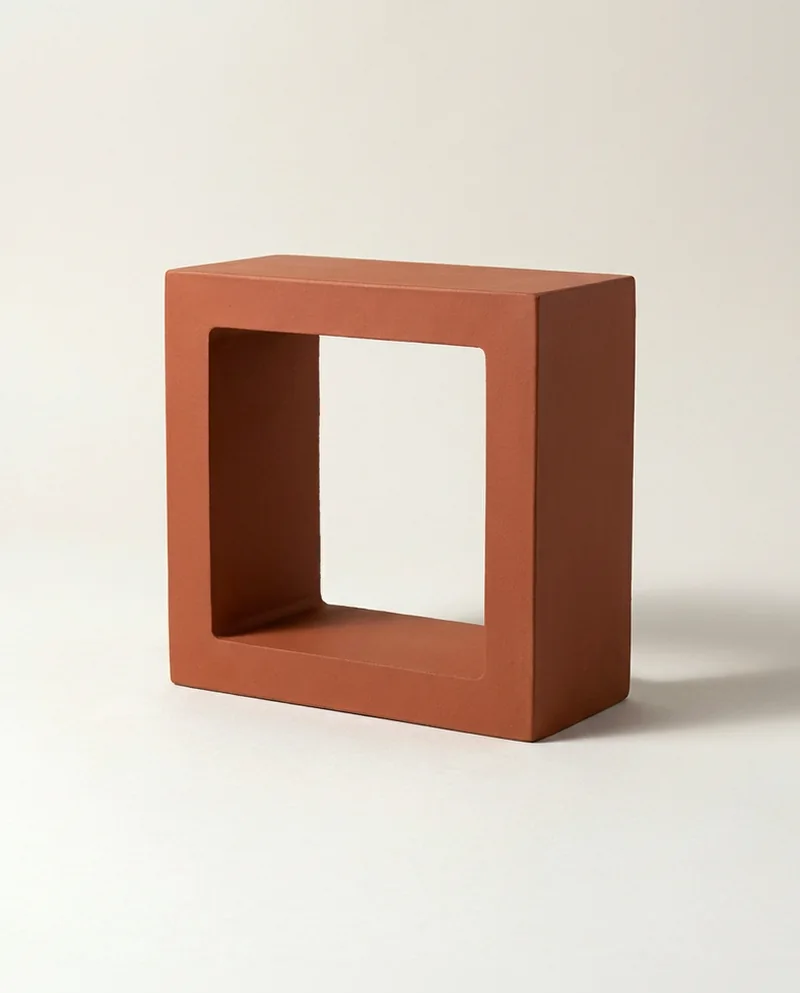
Valencia LE 2
A larger frame with one square opening.
20 × 20 × 7 cm, 25 pcs per m²
Essential


Valencia LE 8
A large piece with thirteen lantern openings.
29.5 × 27.5 × 7 cm, 12.3 pcs per m²
Essential


Andalúzia TB 3
A tall piece with a rounded opening.
12 × 24 × 8 cm, 33 pcs per m²
Premium

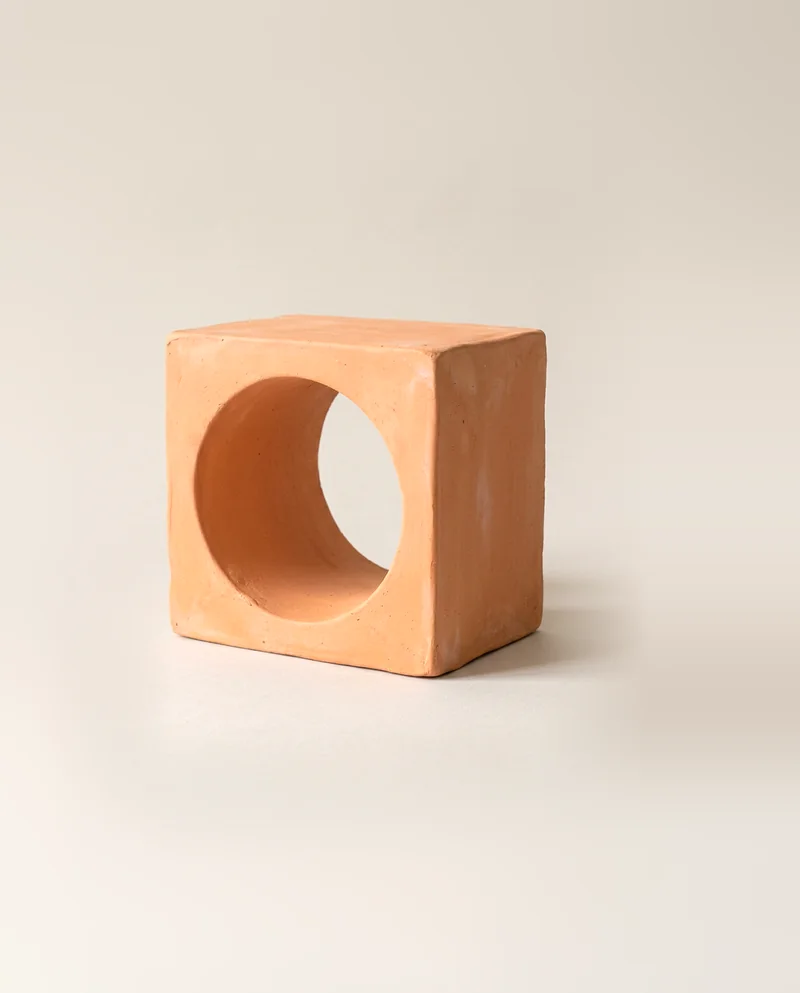
Valencia MC 12
A small piece with a round opening.
11 × 11 × 8 cm, 83 pcs per m²
Premium
Laying and weight
Both glass blocks and breeze blocks are laid in mortar, so a partition made of them has its own weight, which the floor slab or floor must be able to carry. We state the weight of each block and the quantity per m² for every model; the assessment is a job for a structural engineer. With breeze blocks, reinforcement goes into the bed joints and the partition is anchored to the adjoining walls.
Price
Standard glass blocks are among the cheaper solutions. Ceramic breeze blocks start at €49–120 per m² in the Essential line, while handmade and Italian collections in the Premium line cost over €310 per m². Prices are indicative, incl. VAT, excluding transport.
When to choose which
You will find suitable models and examples of use on the page Breeze block partitions and room dividers.
- Breeze blocks: living room and kitchen, dining room, entrance hall, a screen behind reception, counter cladding. Anywhere you want light, air and a warm material.
- Glass blocks: bathroom, separating a bedroom, places where you need to dampen sound or keep moisture and odours apart.
- Combination: a solid or glass block partition up to a certain height, with a band of breeze blocks above it that connects the space with air and light.
Frequently asked questions
Does a breeze block partition let sound through?
Yes, the openings let both air and sound through. If you need an acoustically separated room, glass blocks or a solid partition are more suitable.
Can breeze blocks be used in a bathroom?
As a screen, yes. Bear in mind that moisture will pass through the openings into the next space. Glazed blocks are easier to keep clean around water.
Which is cheaper, breeze blocks or glass blocks?
Standard glass blocks are usually cheaper. Ceramic breeze blocks cost from around €49 per m² in the Essential line.
Want to compare the partition in your space?
Send us a floor plan or a photo. We will prepare a visualisation of a breeze block partition and a quote.
Request a visualisation